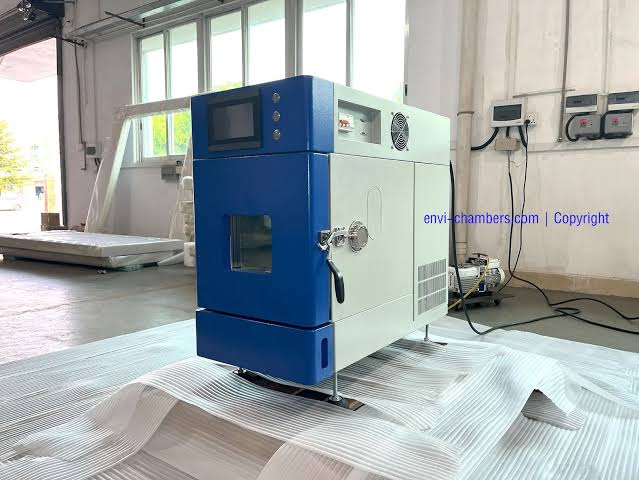
Aerospace components and systems must operate reliably under some of the most demanding environmental conditions imaginable. Aircraft, spacecraft, engines, avionics, sensors, communication equipment, and other critical systems may encounter extreme altitude, low atmospheric pressure, temperature changes, and reduced air density during operation. Testing these conditions on the ground helps engineers identify potential failures before equipment is placed into service. An altitude test chamber provides a controlled environment for reproducing high-altitude conditions and evaluating how aerospace hardware performs under pressure.
Understanding Altitude Testing in Aerospace
Altitude testing is designed to simulate the atmospheric conditions experienced by equipment at different elevations. As altitude increases, atmospheric pressure decreases, which can affect cooling, mechanical performance, electrical insulation, fluid behavior, seals, and other characteristics.
An altitude test chamber uses controlled pressure and, depending on the system, temperature conditions to recreate these environments. Engineers can establish specific test profiles and monitor equipment throughout the process. This approach provides valuable information without requiring every component to be tested during an actual flight.
For aerospace manufacturers, controlled laboratory testing can support product development, qualification, troubleshooting, and validation. It can also help organizations evaluate whether a component meets applicable engineering requirements before moving toward production or operational use.
Why Aerospace Components Require Altitude Testing
Aerospace hardware can respond differently when exposed to low-pressure environments. A component that performs normally at ground level may behave differently when atmospheric pressure changes significantly.
Pressure Effects on Components
Low pressure can influence seals, valves, actuators, fluid systems, and pressurized assemblies. Materials may expand, contract, or behave differently depending on their design and operating conditions. Testing helps engineers observe these effects and identify weaknesses.
Thermal Management Challenges
Air density decreases at higher altitudes, reducing the effectiveness of some air-based cooling methods. Electronic systems, power equipment, and avionics may therefore experience different thermal conditions. Combining altitude and temperature testing can help determine whether equipment can maintain acceptable operating temperatures.
Electrical and Electronic Performance
Changes in pressure can affect electrical components and systems, particularly when insulation, arcing, or heat dissipation becomes a concern. Aerospace electronics can be tested under controlled atmospheric conditions to identify unexpected behavior and verify reliable operation.
Testing Aerospace Components in an Altitude Test Chamber
An altitude test chamber allows engineers to create repeatable environmental conditions. A typical test begins with defining the required altitude profile, pressure range, temperature conditions, operating states, and measurement requirements.
The test article is installed inside the chamber with appropriate instrumentation. Sensors may measure temperature, pressure, voltage, current, vibration, flow, or other parameters depending on the component being evaluated.
The chamber then changes the internal environment according to the planned test sequence. Engineers monitor the equipment during pressure transitions and while it operates at the specified simulated altitude.
Testing Individual Components
Individual aerospace components can be tested to understand how materials and mechanisms respond to low-pressure environments. Examples include valves, pumps, actuators, sensors, connectors, electronic assemblies, and mechanical structures.
Component-level testing can reveal problems early, making it easier to modify the design before more expensive system-level testing begins.
Testing Complete Systems
System-level testing provides a broader view of performance. Multiple components can operate together inside the chamber while engineers monitor interactions and overall functionality.
This can be particularly useful for aircraft environmental-control equipment, avionics systems, power systems, communication equipment, and other assemblies that must continue functioning under changing atmospheric conditions.
Test Parameters and Instrumentation
Effective altitude testing depends on accurate control and measurement. Pressure is one of the primary parameters, but it may be combined with temperature, humidity, electrical loads, mechanical operation, or other environmental factors.
Instrumentation should be selected according to the objectives of the test. Data acquisition systems can continuously record measurements and help engineers compare actual performance with expected operating limits.
Pressure transition rates can also matter. Rapid changes may expose weaknesses that are not visible during gradual pressure changes. For this reason, test profiles are generally designed around the intended application and applicable qualification requirements.
Benefits of Controlled Aerospace Altitude Testing
One major advantage of chamber-based testing is repeatability. Engineers can recreate similar conditions across multiple tests and compare results more effectively.
Another benefit is controlled troubleshooting. If a component shows unusual behavior, the test can be repeated while adjusting specific variables. This makes it easier to determine whether pressure, temperature, electrical load, or another factor contributed to the observed issue.
Altitude testing can also reduce development risk. Discovering a design weakness in a controlled facility is generally more manageable than discovering it during flight testing or after deployment.
Qualification and Validation Applications
Altitude testing can form part of broader aerospace qualification programs. Depending on the application, equipment may need to demonstrate reliable operation across multiple environmental conditions.
Testing can support design verification by providing measurable evidence of performance. Engineers can document pressure levels, test durations, environmental transitions, operating conditions, and equipment responses.
The resulting data can contribute to engineering reports and qualification documentation. Test procedures should be developed around the applicable standards, customer requirements, product specifications, and intended operating environment.
Combining Altitude With Other Environmental Tests
Aerospace equipment rarely experiences altitude in isolation. Temperature, vibration, humidity, and electrical loads can also affect performance.
Some advanced testing programs therefore combine multiple environmental stresses where the chamber and test equipment are designed to support them. Such testing can provide a more realistic representation of operational conditions and reveal interactions between environmental factors.
Improving Aerospace Product Reliability
The purpose of altitude testing is not simply to expose equipment to low pressure. The larger objective is to understand how the product behaves, identify potential failure mechanisms, and improve reliability.
Test results can influence material selection, thermal design, sealing strategies, electronic protection, mechanical tolerances, and control-system development. Engineers can use the information gathered during testing to refine prototypes and verify improvements through subsequent test cycles.
This iterative process is particularly valuable in aerospace engineering, where reliability and predictable performance are essential.
Choosing the Right Altitude Test Chamber
Selecting suitable chamber equipment depends on the test requirements. Important considerations include chamber size, achievable pressure range, temperature capability, pressure-control accuracy, instrumentation, electrical feedthroughs, data acquisition, and safety features.
The chamber must also accommodate the physical dimensions and operating requirements of the test article. For complex aerospace systems, engineers may need specialized fixtures, external equipment connections, and customized monitoring systems.
A well-designed testing setup should allow the test team to reproduce required conditions accurately while collecting reliable data throughout the procedure.
Conclusion
Altitude testing plays an important role in aerospace component and system development. By recreating low-pressure environments in a controlled facility, engineers can evaluate equipment performance, investigate potential weaknesses, and verify designs before operational deployment.
An altitude test chamber provides the controlled environment needed to simulate high-altitude conditions while allowing detailed monitoring and repeatable testing. From individual sensors and valves to complex avionics and aerospace systems, this testing approach can provide valuable engineering data and support product qualification.
As aerospace technology continues to advance, environmental testing remains an important part of developing equipment capable of performing reliably in demanding atmospheric conditions.