Content creator music licensing is more complicated than most creators realize — until they encounter a problem. A content ID claim, a monetization strip, a geographic restriction, or a video mute teaches the lesson that licensed music carries risks that aren’t visible at the time of use.
Understanding those risks clarifies why original AI-generated music is not just a cost option but a structural protection.
What Is the Licensing Landscape Content Creators Actually Navigate?
When you use music in content, you’re navigating multiple overlapping rights systems simultaneously:
Composition rights. The underlying melody and lyrics, owned by the publisher or songwriter.
Master recording rights. The specific recorded version, owned by the record label or the recording artist.
Performance rights. The right to publicly perform the work, managed by PROs (ASCAP, BMI, SESAC).
Synchronization rights. The right to use music synchronized with video, negotiated separately from other rights.
Most “royalty-free” music licenses cover some of these rights and not others. A track that’s cleared for streaming may not be cleared for monetized YouTube advertising revenue. A track cleared for personal use may not be cleared for commercial brand content.
The gap between what creators believe their license covers and what it actually covers is where most licensing problems originate.
Why Do Content ID Claims Happen Even on “Licensed” Music?
Content ID scans for audio fingerprints regardless of your license status. If a rights holder has registered a fingerprint for a recording you used — even if you have a valid license — the automated system may claim the content before any human review happens.
Resolving the claim requires proving your license, which takes time and may not fully restore lost revenue. The administrative burden falls on the creator even when they’re technically in the right.
What Does an AI Song Generator Change?
An ai song generator that produces original music creates recordings that have never been registered in any rights database, because they didn’t exist before you generated them. There’s no fingerprint to match. The content ID scan finds nothing.
This isn’t a workaround — it’s the absence of the problem. Original music has no upstream rights holder to claim against. The licensing chain ends at the platform that generated it, and the platform’s terms give you clear rights to commercial use.
How Do Subscription Libraries Compare to AI Generation?
Many creators use music subscription services as a licensed solution. These services reduce the risk compared to unlicensed commercial music, but don’t eliminate it. Tracks from subscription libraries are:
- Shared by thousands of other creators (recognition overlap)
- Subject to the platform’s licensing terms, which can change
- Still potentially registered in content ID systems by third parties who improperly claimed ownership
An ai music generator that generates original music eliminates all three of these risks. The music is unique, the terms are clear and stable, and there’s nothing to be claimed.
What Are the Platform-Specific Considerations?
YouTube: Content ID applies to both monetized and unmonetized content. AI-generated original music with no registered fingerprint passes Content ID cleanly.
Twitch: DMCA muting of VODs is triggered by audio fingerprint matching. Unregistered original audio can’t be matched.
TikTok: Commercial content on TikTok requires commercial licensing. Original AI-generated music with commercial use rights covers this use case cleanly.
Instagram/Facebook: Meta’s rights manager scans for registered music. Original generated music passes clean.
How Do the Costs Compare?
Stock music subscription: $15-$50/month with ongoing licensing exposure.
Per-track commercial licensing: $25-$500 per use depending on platform and use type.
AI generation subscription: Consistent monthly cost, unlimited generation, permanent copyright protection.
For creators producing music-reliant content consistently, the AI generation cost structure is both lower and more reliable.
Frequently Asked Questions
Is AI-generated music protected by copyright?
An ai song generator that produces original music creates recordings that have never been registered in any rights database, because they didn’t exist before you generated them. Original music has no upstream rights holder to claim against.
What is the 35 year rule in music?
When you use music in content, you’re navigating multiple overlapping rights systems simultaneously: Composition rights. The right to use music synchronized with video, negotiated separately from other rights.
Is it legal to make money off of AI-generated music?
An ai song generator that produces original music creates recordings that have never been registered in any rights database, because they didn’t exist before you generated them. Original music has no upstream rights holder to claim against.
Can you get in trouble for using AI to make music?
An ai song generator that produces original music creates recordings that have never been registered in any rights database, because they didn’t exist before you generated them. There’s no fingerprint to match.
What Is the Protection Argument?
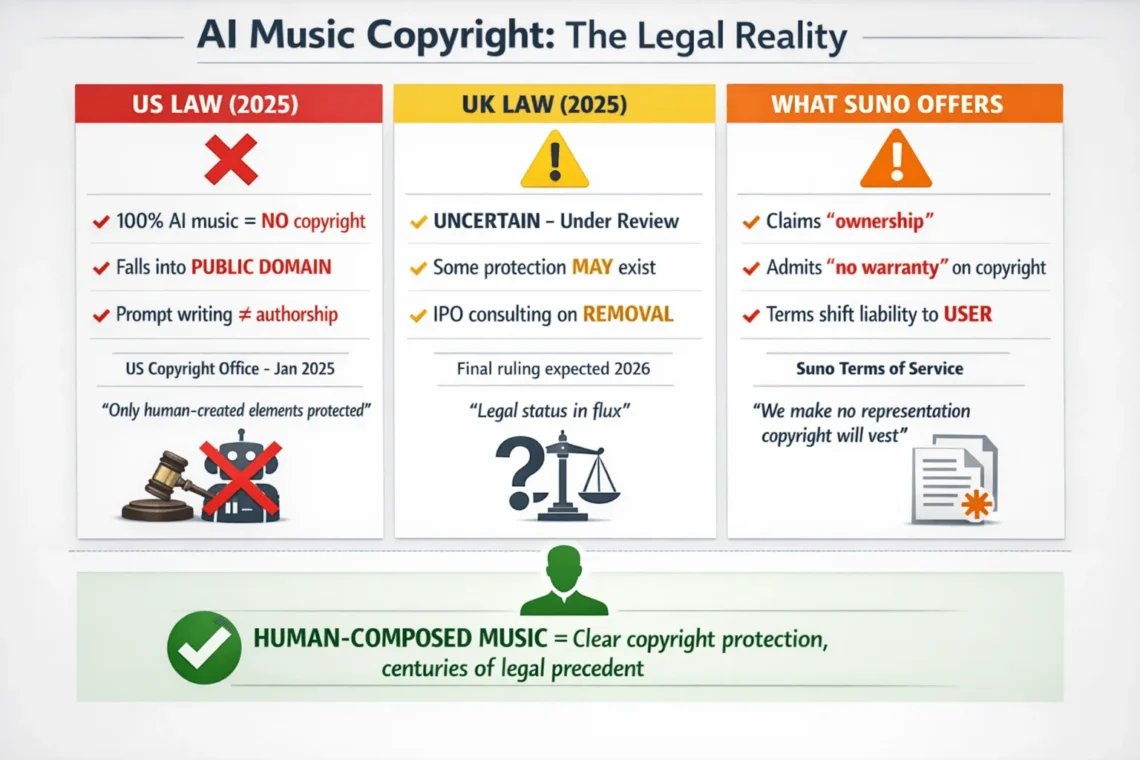
Licensed music is someone else’s property used under terms you didn’t write. Original AI-generated music is yours, under terms you know and control. That distinction is worth more than any cost comparison — because the risk of losing it, even temporarily, is never zero with licensed content.